A Landing Page Fails at the Promise, Not at the Layout
Someone read six words in an advert, believed them, and clicked. What happens next decides everything: either the page continues that sentence, or it starts a different one. Most landing pages start a different one — broader, vaguer, written for everybody, and missing the specific thing that was just promised. The layout is usually fine. The page is answering a question nobody asked.
No credit card required · 30-minute call · No obligation to sign up

Six gaps between the click and the page
Each of these is a mismatch rather than a mistake. Everything on the page is true and well made; it simply does not continue the sentence that got someone here.
- Different wordsThe ad said one thing · the heading says another
- A wider offerClicked for one service · shown all six
- The price appears lateOr only after a form
- A form asking for too muchNine fields for a question
- Full site navigationEvery link is a way to leave
- Proof for a different buyerEnterprise logos on a small-business page
The first row is the most common and the easiest to fix: use the same words. If the advert says emergency boiler repair, the heading says emergency boiler repair — not comprehensive heating solutions. It feels repetitive to the person writing it and it is the entire reason the visitor stays. The page is not for you; it is for somebody who has been reading it for four seconds.
The discipline is subtraction, and it is uncomfortable
A landing page has one job, and everything that is not that job is competing with it. This is easy to agree with and hard to do, because the argument for each addition is always reasonable. Somebody wants the full navigation so people can explore. Somebody wants the other services mentioned in case this one is not right. Somebody wants a second call to action for people who are not ready. Every one of those is defensible on its own, and together they turn a landing page back into a home page.
What replaces them is specificity. Instead of navigation, the answer to the next question. Instead of six services, the one that was clicked, described properly. Instead of a second call to action, a clearer version of the first. The page gets shorter in options and longer in substance, which is the opposite of what most rewrites do.
The form is where the most damage is done, because every field is a small negotiation and nobody sees the ones who quietly decide it is not worth it. The test is simple: can you honestly do something useful with this answer today? A phone number is worth asking for. Company size, when nothing in the process changes based on it, is worth deleting. Anything the sales team would have asked anyway in the first thirty seconds of a call is worth deleting twice.
And then it needs to be fast, because a landing page is met by someone who has already decided to give you a few seconds. This is not a general performance argument — it is that a paid click which never renders has cost the money and delivered nothing at all.
- ✓Use the ad’s own words — Repetitive to write, decisive to read. The visitor has been here four seconds.
- ✓Remove the navigation — On a page with one job, every other link is a way to leave.
- ✓Cut every field you cannot use today — You never see the people who quietly decide the form is not worth it.
- ✓One call to action, said clearly — A second one is not a safety net. It is a decision handed back.
- ✓Proof aimed at this buyer — Enterprise logos on a small-business page argue against you.
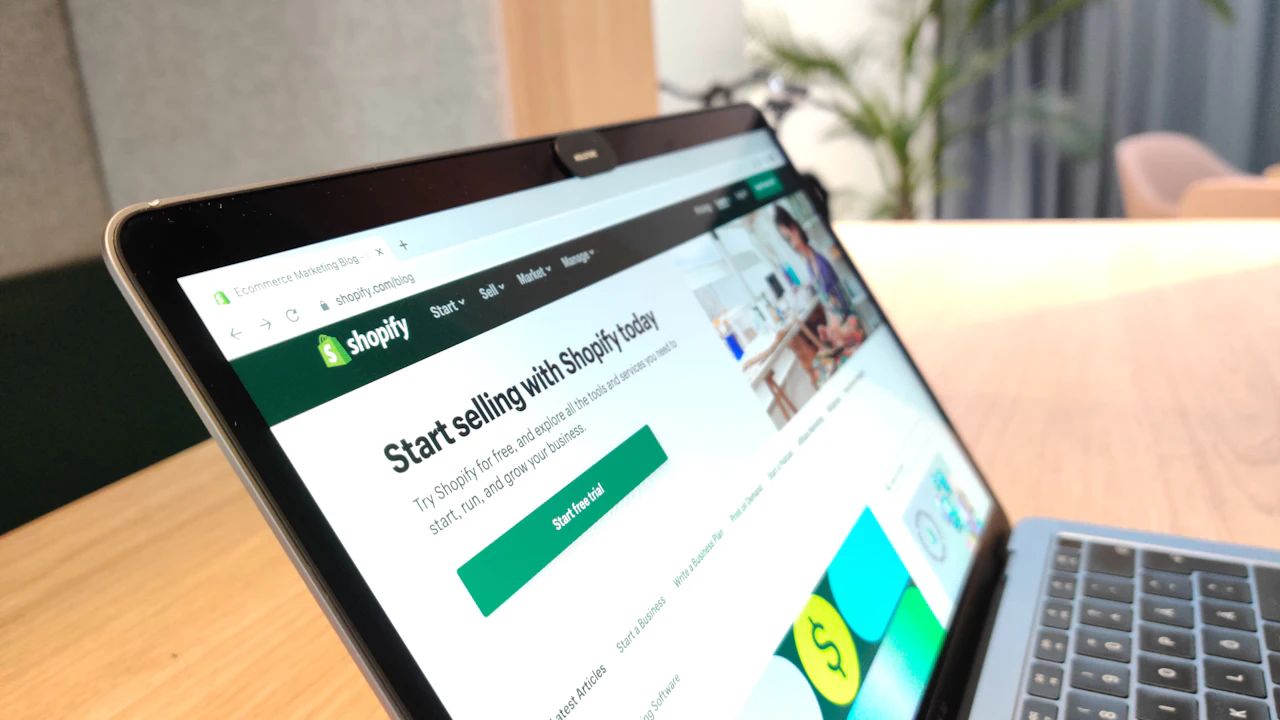
Every addition to a landing page is defensible on its own. Together they turn it back into a home page.
What building one actually involves
Six things, and the first two happen before any design exists.
Read the Advert First
The exact words that earn the click, and the promise inside them. The page is written to continue that sentence, which is why we ask for the ad copy before anything else.
Name the One Job
A booked call, a quote request, a download. Written down and agreed, because everything that follows is judged against it and everything else is competition.
The Form, Cut Down
Every field tested against one question: can you honestly do something with this answer today? Anything a call would establish in thirty seconds does not belong on the page.
Proof for This Buyer
The testimonial, case or number that matters to the person who just clicked — not the most impressive one you own. Mismatched proof argues quietly against you.
Fast, Because It Is Paid For
A click that has already cost money and never renders has delivered nothing. Built light, with the third-party scripts that usually cause this kept off the page.
Measured Honestly
Enquiries that turn into conversations, not form submissions. The two numbers diverge quickly, and only one of them is worth optimising against.
What clients say
Real clients, quoted in their own words — published with their permission.
“We’re very thankful to Ghalib and his team for building a fully-functioning website for our business.”
“Ghalib’s clear guidance has helped improve our website’s SEO performance.”
“It was a pleasure working with Ghalib and his team.”
More of them, in full, on our reviews page.
— Our Proprietary Methodology —
The Visibility Framework™, applied in Landing Page Design
The method doesn’t change by market. What it’s pointed at does.
Audit & Discovery
What the current site earns, where it leaks, what your competitors do better, and what the new one must achieve. Ends in a written scope and a fixed price — not an estimate that grows.
Structure & Design
Sitemap, wireframes and user journeys agreed before decoration, then a design system applied consistently. You approve the shape before we make it beautiful.
Build & Test
Front end, back end, CMS and integrations, on a staging site you can see from day one. Tested on real devices, real screen readers and real slow connections.
Launch & Improve
Redirects verified, analytics connected, handover recorded — then we look at what real visitors actually do and fix what the design assumed wrongly.
Honest, No-Nonsense Commitment
The price we quote after discovery is the price you pay — if we underestimated the work, that is our problem, not a change request. And on any rebuild, if organic traffic drops because of something we did at migration, we fix it at our cost, however long it takes.
Website Development pricing for Landing Page Design, in USD
Priced per page, and cheaper in sets because the second and third page share the components of the first. We do not run the advertising itself — that is not a service we sell — so we work alongside whoever does, and we need their ad copy before we start.
Single Page
One offer, one audience.
- Written from the ad copy, not from the brief
- Form cut to fields you can use today
- Built light, no navigation to leak through
Set of Three
One offer, three audiences or locations.
- Shared components, genuinely different arguments
- Each page written to its own advert
- Reporting set up on enquiries, not submissions
- Optional: bundle in SEO or Social Media
Ongoing
Pages produced as campaigns need them.
- A defined number of pages per month
- Revisions from what the reporting shows
- Component library your team can reuse
- Optional: combine all 4 services for full-funnel growth
Every plan is scoped around your market — get a free audit and we’ll recommend what fits, priced in USD.
What you’re actually committing to
Most agencies keep this in a contract you only see after the sales call. We would rather you knew now, because it is the question everyone asks second — right after the price.
- A fixed price, agreed before we startQuoted after discovery, not estimated on a call. If the work takes longer than we thought, that is our risk — the price does not move unless you change the scope.
- 50% to begin, 50% at launchNo large upfront payment held for months, and nothing owed until the site is live and you have seen it working.
- You own everythingDomain, hosting, code repository, design files and content — all in your name from day one, and still yours if we never work together again.
- No proprietary lock-inStandard, widely-used technology only. Any competent developer can take the site over, and nothing stops working because you stopped paying us.
- Two rounds of revisions per stageIncluded at wireframe and design stage, where changes are cheap. Beyond that, or after sign-off, changes are quoted before any work starts.
- 30 days of support after launchBugs and small tweaks included as standard. A care plan afterwards is optional, never automatic, and cancellable with 30 days’ notice.
These are the terms as they appear in the agreement itself — nothing here is softened for the website. The full wording lives in our terms and conditions, and you get the agreement to read before anything is signed or invoiced.
Landing Page Design Website Development questions, answered
Related Website Development pages
Same service, different angle — by market, by discipline and by platform.
Want the page to keep the promise?
Free 30-minute audit · No obligation · Response within 24 hours
Get in touch with Ghalib Ashrafi HQ
Ghalib Ashrafi takes on work for brands in six markets — the UK, USA, UAE, Saudi Arabia, Australia and Pakistan. Every enquiry gets a reply within 24 hours.