
Service.Before you rebuild
Services
SEO Services Social Media Website Development AI Automation About Reviews Portfolio Blog Contact Free Website AuditBuilt on standard technology you fully own, that any developer can maintain — so leaving us is always possible, and never expensive. Fast, accessible and search-ready, for brands in the UK, USA, UAE, Saudi Arabia, Australia and Pakistan.
Fixed project price · 30-minute call · No obligation to sign up

Clients & Brands that work with Ghalib Ashrafi
Fourteen of the brands we work with — there are many more across six markets. See the portfolio →
“I’ve been hugely impressed with the digital marketing knowledge and expertise from the Ghalib Ashrafi team. Fantastic results, month after month.”
Nobody wakes up wanting a website. They want the thing the current one is failing to do.
Everything from the first conversation to thirty days after launch — one team, one fixed price, no handoffs between agencies who never speak.
What the site has to achieve, who it is for, what they need to do on it, and what the current one gets wrong. Ends in a written scope you sign off before anything is designed.
Page structure agreed in wireframes before a single pixel is decorated, then a design system — type, colour, components — rather than a set of disconnected page pictures.
Hand-built, responsive from 320px upward, semantic HTML, and tested on real devices rather than a browser window dragged narrow.
A content system a non-technical person can genuinely use, with the fields locked down so nobody can accidentally break a layout.
Products, checkout, payment gateways, shipping and tax rules — plus the connections to your CRM, booking system, accounting or inventory that stop double entry.
Image formats, lazy loading, caching, font strategy and script discipline. Speed is designed in, not bolted on with a plugin at the end.
Keyboard navigation, contrast, focus states, labelled forms and screen-reader structure, tested against WCAG 2.2 AA — which is a legal expectation in several of the markets we build for.
Crawlable structure, heading hierarchy, schema, canonicals, sitemap — and on a rebuild, every old URL mapped to a new one before launch, not after the traffic drops.
Hosting set up in your name, analytics and Search Console connected, a recorded walkthrough of your actual site, and thirty days of support while you settle in.
We are not loyal to any of these. Part of the free audit is telling you which one your project actually needs — including when that answer is cheaper than hiring us.
Still the most sensible default for content-heavy business sites. Enormous ecosystem, easy to hire for, and genuinely good for publishing. Built properly and kept lean — not thirty plugins deep.
Business sites · Blogs · Multi-page brochure · MembershipThe path of least resistance for selling physical products. Payments, tax, shipping and PCI compliance handled for you. We build custom themes on it rather than fighting it.
Retail · DTC brands · Subscriptions · Multi-currencyWhere a shop needs to live inside a bigger content site, or where the product rules are too unusual for a hosted platform. More control, more responsibility.
Complex catalogues · B2B pricing · Content-led retailExcellent for design-led marketing sites where a small team wants to change layouts without a developer. Weaker once you need bespoke back-end logic.
Startups · Agencies · Campaign sites · Design-led brandsLaravel or Next.js when the site is really an application — portals, calculators, booking engines, dashboards. Chosen when a CMS would be a workaround rather than a fit.
SaaS · Portals · Booking systems · Bespoke toolsA separated front end and content back end, for speed and multi-channel publishing. Genuinely powerful and genuinely more expensive to run — we recommend it rarely, and only with a reason.
High traffic · Multi-brand · App + web from one sourceThere is no prize for building something complicated. If a template on a hosted builder will do your job, we will tell you that on the first call — and you should spend the difference on marketing the site instead of owning a bespoke one.
What a website has to do differs enormously by sector — a clinic taking bookings and a wholesaler quoting trade prices share almost nothing but a browser.

Catalogue structure, filtering, checkout speed and returns flow — the four places online shops quietly lose money.

Marketing site, docs, pricing pages and trial signup, built to be shipped against weekly rather than rebuilt annually.
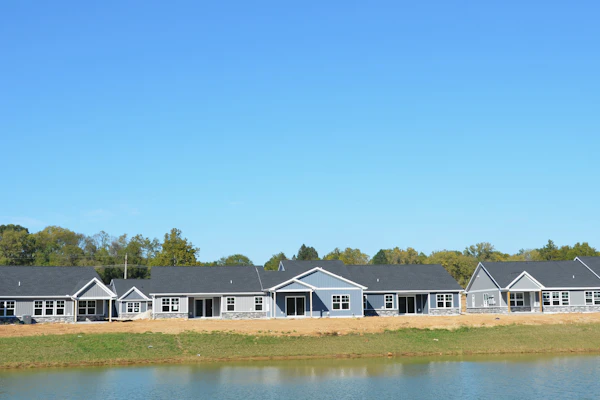
Listing feeds, map search, saved properties and valuation enquiries — with portal integrations that stay in sync.

Online booking, treatment pages, practitioner profiles and accessibility done properly, because here it is not optional.

Course catalogues, application forms, prospectus downloads and open-day campaigns tied to enrolment deadlines.

Availability, booking engines and rich destination content that has to load fast on a phone with one bar of signal.

Calculators, quote journeys, document handling and the compliance trail that has to sit behind all of it.

Technical specification content, project portfolios and installer or partner portals behind a login.

Service pages that survive scrutiny, credible team profiles and case evidence — the site does the qualifying before the call.

Service-area pages, quote forms, review proof and a phone number that is never more than a thumb away on mobile.
Code travels. Compliance, currency and payment habits do not.
We take on web builds in all six markets below. The UK, USA and Pakistan have their own country pages so far; the other three are in progress, so talk to us directly in the meantime.
 United Kingdom
UK and EU buyers expect cookie consent handled properly and increasingly ask about accessibility before they sign — public-sector and enterprise procurement often require a WCAG statement outright. Payment expectations centre on cards and Apple Pay, and GDPR shapes how forms, analytics and data retention are built.
Quoted in GBP Website development in the UK → United States
Accessibility is a genuine litigation risk rather than a nice-to-have, so we build to standard and document it. Sales tax varies by state and needs handling in the platform rather than the spreadsheet, and buyers arrive from a wider spread of devices and connection speeds than in the UK.
Quoted in USD Website development in the USA → Pakistan
Almost all traffic is mobile and a lot of it is on constrained connections, so page weight is a commercial decision, not a technical preference. Local gateways and cash on delivery matter more than international card processing, and a WhatsApp enquiry route usually converts better than a contact form.
Quoted in USD or PKR Website development in Pakistan → United Arab Emirates
A bilingual site is not a translation job with a language switcher bolted on. Right-to-left Arabic changes the layout, not just the text — navigation, forms, icons and anything with a direction all mirror. Budget it as close to two front-ends, and decide early, because retrofitting RTL costs far more than building for it.
Quoted in USD or AED United Arab Emirates page in progress — talk to us Saudi Arabia
Where a UAE build treats Arabic and English as equals, a Saudi one usually treats Arabic as primary and English as the second version. That inverts the design work: the RTL layout is the one that has to be right, and it is the one most agencies build second and test least. At 65.43% mobile, it also has to be right on a phone first.
Quoted in USD or SAR Saudi Arabia page in progress — talk to us Australia
A .com.au cannot be held without an ongoing Australian Presence, and auDA cancels the licence when that lapses — an administrative risk with a technical outcome. Physical distance matters too: Australia sits far from most origin servers, so hosting and CDN choices show up in load times more visibly than they do in Europe.
Quoted in USD or AUD Australia page in progress — talk to usEvery number we publish is one you can check. The rebuild we can show you in full is our own: 24 ranking pages, every URL mapped before launch and nothing left to 404. Client projects join it here as each client clears us to name them.
Guest purchase, saved addresses and the wallet buttons people actually use, on a page that loads before they lose interest. Most abandoned carts are a checkout problem long before they are a marketing one.

Every URL read and mapped before anything is replaced, not after. This is the part a development agency without search people cannot do for you, and the part nobody notices until it has gone wrong.

A light build that survives a weak signal, service-area pages that say where you go, and WhatsApp as the enquiry route rather than a form nobody completes on a phone.
Real reviews, published under the reviewer’s own name. The first is a website client — the other is about our work in general, and is not claimed as anything else.
“We’re very thankful to Ghalib and his team for building a fully-functioning website for our business.”
“I am thrilled to have his assistance, it was more than I expected.”
The same four-stage loop we run on search and social, adapted to a project that ships once and then has to keep earning.
What the current site earns, where it leaks, what your competitors do better, and what the new one must achieve. Ends in a written scope and a fixed price — not an estimate that grows.
Sitemap, wireframes and user journeys agreed before decoration, then a design system applied consistently. You approve the shape before we make it beautiful.
Front end, back end, CMS and integrations, on a staging site you can see from day one. Tested on real devices, real screen readers and real slow connections.
Redirects verified, analytics connected, handover recorded — then we look at what real visitors actually do and fix what the design assumed wrongly.
The price we quote after discovery is the price you pay — if we underestimated the work, that is our problem, not a change request. And on any rebuild, if organic traffic drops because of something we did at migration, we fix it at our cost, however long it takes.
Honest durations for a typical business site. The variable is almost never the code.
Workshop, audit of the existing site, sitemap agreed, fixed price signed off. Content deadline set here, in writing.
Wireframes, then full design of key templates. Two rounds of revision built into the price at this stage, where changes are cheap.
Staging site live and visible throughout. Integrations connected, content loaded, accessibility and performance tested before anyone talks about launch.
Redirects verified, analytics connected, handover recorded, then thirty days of included support while you use it properly for the first time.
The most common thing we are asked to rescue is a site whose owner has no access to it. So here is the full list of what changes hands, and whose name it is all in.
Registered and billed in your name from the start, with the logins handed to you. We are added as a user; we are never the owner.
Full source history in your account, not a zip file emailed at the end. Any developer can clone it and carry on.
The working files, the design system and the exported assets — so a future designer starts from your brand rather than from a screenshot.
Video of someone editing your site, page by page, not a generic CMS manual nobody watches. Yours to send to whoever joins next.
Connected, verified and owned by you, with conversion tracking configured for the actions that matter rather than page views.
On a rebuild, the full old-URL-to-new-URL sheet, applied and tested. Kept as a document so anyone can audit it later.
Nothing we build depends on a licence, builder or hosting account that only we can hold. If you decide to work with someone else next year, the site does not care — and neither should you have to.
The test we apply before calling a project finished: if we disappeared tomorrow, could you keep running this site? If the answer is no, it is not handed over — it is hostage.
Most web agencies hand over a site and move on. We are still there afterwards, running the SEO and the social that have to work on top of it — which is a strong incentive to build it properly the first time.
That last point is the one worth dwelling on. The most expensive mistake in this industry is a redesign that launches beautifully and quietly halves the enquiries, because URLs changed, redirects were missed, page speed regressed or content that was ranking got “tidied up”. It happens constantly, and it happens because the team building the site has no stake in what happens to it a month later.
We do have that stake. On most of our projects the same people are running search and social for the same client afterwards, so a site that loads slowly or buries its enquiry form becomes our problem too. It changes the decisions — fewer clever animations, more attention to the form; fewer stock heroes, more real photography we can also use elsewhere.
Curious how the website fits with the rest? Explore SEO services, social media management, or the AI & ML automation add-on that layers on top of any service.

“Ask any agency what happens to your rankings on launch day. If they treat it as someone else’s department, you have found the reason so many redesigns quietly cost more than they earn.”
A small senior team. The person in the discovery call is the person who designs it, and they are still there at launch.

The common agency model is a polished pitch from senior people followed by delivery from whoever is available. We are deliberately small enough that this cannot happen — you meet the strategist and the developer at the start, and they stay on the project.
It also means we take on fewer builds at once. Web development is only a volume business if you are willing to reuse the same template with a different logo, and that is not what anybody is paying us for.
AI has changed how quickly a website can be built. It has not changed what makes one good. Here is exactly where we let it near the work.
Component skeletons, config, repetitive markup and test cases generated in seconds, then reviewed by a developer who is responsible for it.
A second pass over every pull request looking for security issues, accessibility mistakes and performance traps a tired human misses at 6pm.
First-draft page copy, metadata and alt text, plus restructuring hundreds of legacy pages into new templates without retyping them.
Matching thousands of old URLs to their closest new equivalent by content similarity — the single most tedious and most damaging job to get wrong.
Every build checked against accessibility rules, broken links, Core Web Vitals budgets and visual regressions before a human ever opens it.
Models reading session recordings and funnel data to find where real visitors hesitate, so the next iteration fixes something real.
What we will not do: ship generated code nobody on the team understands, publish AI-written pages at volume to game search, use synthetic imagery of premises or people that do not exist, or hand you a site whose architecture no human can explain. An AI can produce something that looks finished in an afternoon. Whether it is accessible, secure, fast and maintainable is a different question — and it is the one you are actually paying for.
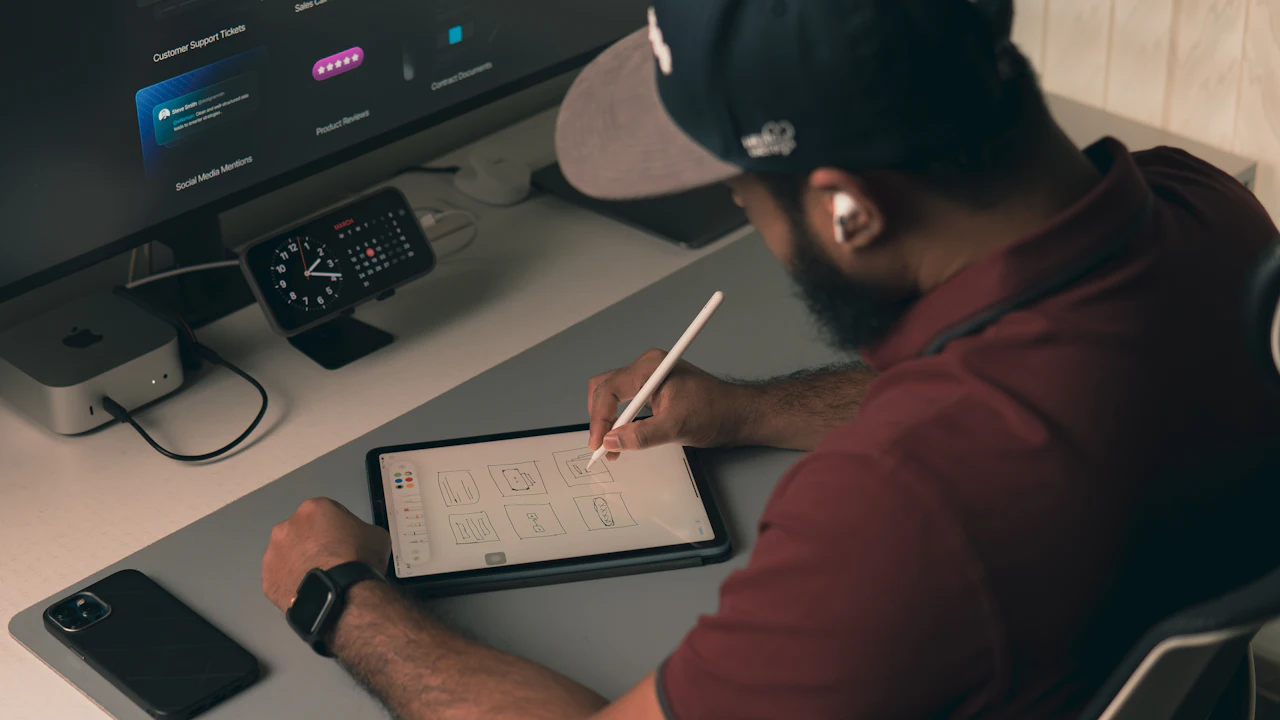
Website development is the work of turning a business requirement into a working website — planning what it must do, designing how it will look and behave, writing the code that makes it happen, connecting it to whatever systems it needs, and keeping it running afterwards.
It gets confused with two neighbours. Web design is how it looks and how it feels to use; web development is how it works. Front-end is everything the visitor sees and touches; back-end is the part they never see — the database, the logic, the integrations, the security. A complete project needs all four, which is why buying design alone so often produces something beautiful that nobody can update.
The other thing worth knowing: a website is not a finished object. It is a product that should keep changing as you learn what visitors actually do on it. Any quote that treats it as a one-off delivery with no life afterwards is describing a brochure, not a business asset.

Anywhere from a few hundred to six figures, which is a useless answer on its own. The number is driven by four things: how many unique page templates there are, how much of the design is bespoke rather than adapted, how many other systems it has to talk to, and whether the content already exists. Here is the shape of the market:
DIY range as published by Forbes Advisor; the remaining bands reflect commonly quoted agency project pricing across the UK and US. Our own one-page tier sits below the brochure band on purpose — that band describes a multi-page site, and one page is a smaller job rather than a cheaper version of the same one.
Two things to watch in any quote. First, whether it is fixed or hourly — hourly quotes have no ceiling and every question becomes billable. Second, what happens after launch: some agencies price the build low and recover it through a hosting or maintenance contract you cannot leave. Ask who will own the domain and the code, and if the answer is not “you”, the cheap quote is not cheap.
Quoted as one figure after a free discovery call — not an hourly rate, and not a range that grows. Priced in your local currency.
A single page that does one job, quoted as one fixed figure.
A small, fast, credible site that does one job well.
Bespoke design, real functionality, built to grow.
Online stores and sites that are really applications.
Get a free audit and we’ll tell you which tier your project actually needs — including when the answer is a smaller one.
We warn people to ask this before signing anywhere, so it would be poor form not to answer it ourselves. None of it is billed by us, and none of it is compulsory.
Hosting and domain figures are typical third-party rates for a business site, quoted so you can sanity-check any bill — we do not resell either, and we take no commission on them.
Websites are projects, not retainers, so the terms work differently to our SEO and social services. Published here rather than kept in a contract you only see after the sales call.
These are the terms as they appear in the agreement itself — nothing here is softened for the website. The full wording lives in our terms and conditions, and you get the agreement to read before anything is signed or invoiced.
Weighing up a freelancer, a big agency, or the cheapest quote in your inbox? Here is the honest comparison.
| Option | Quality | What happens after launch | Ghalib Ashrafi |
|---|---|---|---|
| Solo Freelancer | Can be excellent — but design, code, SEO and accessibility rarely live in one person | Support depends entirely on them still being available | A team, with cover, and 30 days of support built in |
| Large Agency | Strong process, often junior delivery behind a senior pitch | Change requests routed through account management | The people who pitched are the people who build |
| Cheapest Quote | Templated, plugin-heavy, rarely accessible or fast | Recovered later through hosting or maintenance you can’t leave | Fixed price, standard tech, everything in your name |
| Offshore Dev Shop | Capable, but usually briefed rather than consulted | Handover often arrives as a zip file and a login | Repository, design files and recorded walkthrough |
Often, yes. This is the question we get asked most nervously and answer most bluntly, because for a meaningful share of the businesses that contact us, a builder is the right call.
So: if a builder will genuinely do the job, use one — and spend the difference on marketing, because an unfound website is worth nothing regardless of who built it. The moment to hire a developer is when the platform starts dictating what your business can offer, or when the workarounds cost more each year than the build would have. We will tell you which side of that line you are on during the free audit, and we lose that sale often enough to know we mean it.
Web projects fail for boringly predictable reasons, and almost none of them are technical. Here they are, so you can rule us out in ninety seconds.
These are the conditions under which paying for bespoke development pays you back.
We would rather lose the project now than deliver it into a situation where it cannot succeed.
If you land in the right-hand column, you will hear it on the first call — not three months and several invoices later. Turning away work that was never going to succeed is cheaper for us than doing it badly, and considerably better for both reputations.
“We need a new website” is often the wrong diagnosis. Plenty of sites that feel tired are structurally fine and losing enquiries to three fixable problems: slow mobile pages, a form nobody can find, and content that answers the wrong questions.
A rebuild is the most expensive way to fix any of those. Our audit tells you which you are actually facing, and we will happily talk you out of a project we would have been paid for.
No sales sequence, no “discovery call” that turns out to be a pitch. Here is the whole process, start to finish.
A person reads your message and responds — with a time for a call, or a straight answer if that’s all you needed.
What the site has to do, what the current one gets wrong, and roughly what budget you have in mind. No access needed at this stage.
Speed, accessibility, structure, SEO health and conversion paths on your existing site — plus whether you need a rebuild at all.
The problems, what we’d build, and one number. Yours to keep and act on with anyone — no obligation and no follow-up sequence.
The things people actually ask on the first call.
Web work isn’t one job — it’s a set of connected disciplines applied to a specific platform, market and industry. Browse the full map below; each page covers its own scope, process and pricing.
Not sure which of these you need? Get a free audit and we’ll tell you what your site actually needs — including when the answer is “less than you think”.
Three of the pages under this one, if you want the detail before you get in touch.

Free 30-minute audit · No obligation · Response within 24 hours
Ghalib Ashrafi takes on work for brands in six markets — the UK, USA, UAE, Saudi Arabia, Australia and Pakistan. Every enquiry gets a reply within 24 hours.