The Expensive Part Is the Assumptions That Arrive With the Brief
Most Pakistani website projects inherit three beliefs from somewhere else: that everyone is on a phone, that the payment options are the Western ones, and that English is sufficient. Every one of those is a build decision, every one is costly to reverse afterwards, and the first is measurably wrong — StatCounter put Pakistani desktop traffic at 51.51% against mobile’s 47.87% in July 2026.
No credit card required · 30-minute call · No obligation to sign up
Six assumptions worth checking before anything is built
None of these is exotic. All six are ordinary decisions that get made silently, by defaulting to how it is done somewhere else.
- Desktop is not the fallback51.51% desktop · 47.87% mobile · StatCounter
- Payment rails are localBank transfer and wallets, not just cards
- The conversation moves to WhatsAppUsually within two messages
- Payload budget is a real constraintA heavy build punishes the slowest connection
- Urdu and English both appearIncluding Roman Urdu, which breaks assumptions
- Cash on delivery still existsAnd it changes the whole order flow
The first row is the one that quietly costs the most, and it is worth reading carefully rather than as a correction. Mobile-first design is still right — Google indexes mobile-first whatever your audience does, so that part is not in question. What is wrong is the leap from “mobile-first” to “mobile-only”. If half your traffic is on a desktop and the desktop layout was never opened by anybody after the design was signed off, that is half the audience receiving whatever the breakpoints happened to produce. It is checkable in ten minutes and it is fixed in an afternoon at build time.
The defaults were written for somewhere else
A website framework, a theme and a checkout plugin all arrive with decisions already made — about which payment methods matter, which devices to prioritise, which characters will appear in a name field. Those decisions were sensible for the market the tool was built in. Shipping them unexamined into a Pakistani project is how a site ends up technically correct and commercially awkward.
Payment is the clearest case. A checkout offering only card payment excludes a large part of the market, and one built without a bank-transfer or wallet path pushes customers into a WhatsApp conversation to complete an order the site could have taken. That is not a failure of the customer; it is the site declining to do its job. Cash on delivery, where it applies, changes the order flow rather than adding a button to it — confirmation, address accuracy and returns all behave differently.
The WhatsApp point deserves saying plainly because it is treated as a workaround rather than a design input. For a great many Pakistani businesses the conversation moves to WhatsApp within two messages, and it converts there. A site that fights this — burying the number, insisting on a form — loses enquiries to preserve a funnel diagram. Designing the handoff deliberately, with the context carried across, works considerably better than pretending it will not happen.
And payload matters more here than the specification of an average phone suggests, because connection quality varies enormously across the country and across the day. That does not require an austere site. It requires the ordinary discipline — images sized properly, fonts not blocking render, scripts that are actually used — applied rather than assumed. The same build is faster everywhere; it is simply more noticeable here.
- ✓Mobile-first, not mobile-only — Desktop is 51.51% of traffic. A layout nobody opened after sign-off is half the audience.
- ✓Payment rails are a build decision — Bank transfer and wallets, not a card-only checkout with a note underneath.
- ✓Design the WhatsApp handoff — It happens within two messages. Carrying context across beats defending the funnel.
- ✓Cash on delivery changes the flow — Not a payment button — confirmation, address accuracy and returns all differ.
- ✓Payload discipline is ordinary work — Sized images, non-blocking fonts, scripts you use. Faster everywhere, noticed here.
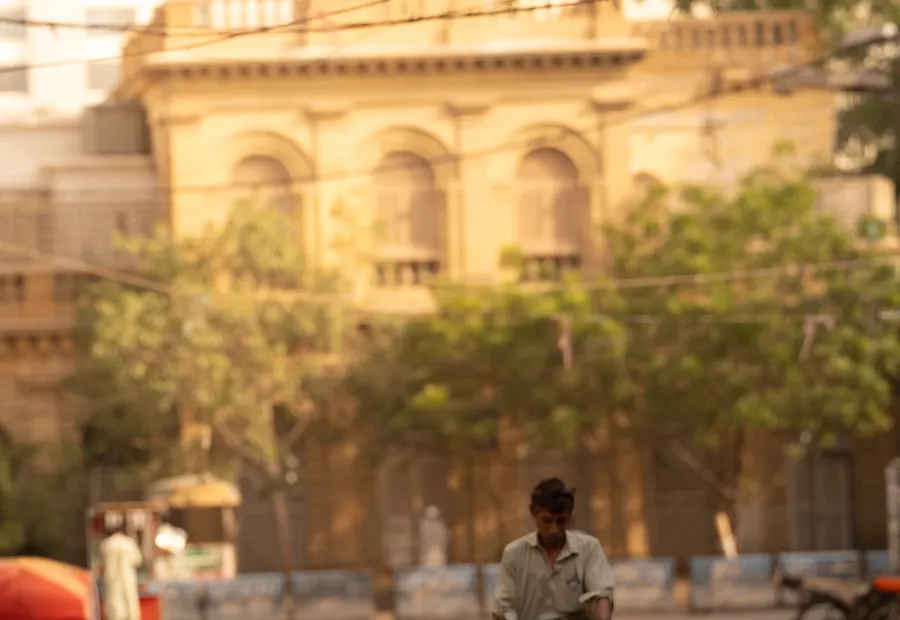
Mobile-first is right. Mobile-only is a different claim, and on 51.51% desktop traffic it means half the audience gets whatever the breakpoints happened to produce.
What a build here actually involves
Six things, and most of them are decisions rather than features.
Both Layouts, Actually Tested
Mobile-first in the build, and the desktop opened and used by somebody before launch. On a 51.51% desktop split, an untested wide layout is not an edge case.
Local Payment Paths
Bank transfer, wallets and card, with cash on delivery designed into the order flow where it applies rather than bolted onto the end of it.
A Deliberate WhatsApp Handoff
The conversation moves there within two messages, so it is designed rather than resisted — with the product, page or enquiry carried across instead of the customer repeating themselves.
A Payload Budget
Images sized properly, fonts that do not block rendering, scripts that are genuinely used. Ordinary discipline, applied rather than assumed, and more noticeable here than in London.
Language Handled Honestly
Urdu, English or both, with form fields and search that accept what people actually type — including Roman Urdu, which breaks validation written for somewhere else.
Handover You Can Use
Documentation and training in person if that helps, because this is the one market where that is a realistic sentence rather than a scheduling problem.
What clients say
Real clients, quoted in their own words — published with their permission.
“We’re very thankful to Ghalib and his team for building a fully-functioning website for our business.”
“Working with Ghalib has been an outstanding decision for our company.”
“Highly professional and dedicated to achieving results.”
More of them, in full, on our reviews page.
— Our Proprietary Methodology —
The Visibility Framework™, applied in Pakistan
The method doesn’t change by market. What it’s pointed at does.
Audit & Discovery
What the current site earns, where it leaks, what your competitors do better, and what the new one must achieve. Ends in a written scope and a fixed price — not an estimate that grows.
Structure & Design
Sitemap, wireframes and user journeys agreed before decoration, then a design system applied consistently. You approve the shape before we make it beautiful.
Build & Test
Front end, back end, CMS and integrations, on a staging site you can see from day one. Tested on real devices, real screen readers and real slow connections.
Launch & Improve
Redirects verified, analytics connected, handover recorded — then we look at what real visitors actually do and fix what the design assumed wrongly.
Honest, No-Nonsense Commitment
The price we quote after discovery is the price you pay — if we underestimated the work, that is our problem, not a change request. And on any rebuild, if organic traffic drops because of something we did at migration, we fix it at our cost, however long it takes.
Website Development pricing for Pakistan, in PKR
This is the one market page on this site without a printed band, for the same reason as our Pakistani SEO and social pages: there is no rupee figure recorded here, and converting the dollar tiers at today’s rate produces a number that looks precise and describes nothing. You get a real figure after the first call, in rupees.
Starter
A well-built site, both layouts tested.
- Mobile and desktop both actually used before launch
- Local payment paths where relevant
- Handover in person if that helps
Growth
Larger site or a real catalogue.
- Everything in Starter, at more scale
- WhatsApp handoff designed in
- Payload budget set and held
- Optional: bundle in SEO or Social Media
Enterprise
Multi-site or integrated builds.
- Dedicated senior developer
- Integrations and multi-site architecture
- Ongoing maintenance available
- Optional: combine all 4 services for full-funnel growth
Every plan is scoped around your market — get a free audit and we’ll recommend what fits, priced in PKR.
What you’re actually committing to
Most agencies keep this in a contract you only see after the sales call. We would rather you knew now, because it is the question everyone asks second — right after the price.
- A fixed price, agreed before we startQuoted after discovery, not estimated on a call. If the work takes longer than we thought, that is our risk — the price does not move unless you change the scope.
- 50% to begin, 50% at launchNo large upfront payment held for months, and nothing owed until the site is live and you have seen it working.
- You own everythingDomain, hosting, code repository, design files and content — all in your name from day one, and still yours if we never work together again.
- No proprietary lock-inStandard, widely-used technology only. Any competent developer can take the site over, and nothing stops working because you stopped paying us.
- Two rounds of revisions per stageIncluded at wireframe and design stage, where changes are cheap. Beyond that, or after sign-off, changes are quoted before any work starts.
- 30 days of support after launchBugs and small tweaks included as standard. A care plan afterwards is optional, never automatic, and cancellable with 30 days’ notice.
These are the terms as they appear in the agreement itself — nothing here is softened for the website. The full wording lives in our terms and conditions, and you get the agreement to read before anything is signed or invoiced.
Pakistan Website Development questions, answered
Related Website Development pages
Same service, different angle — by market, by discipline and by platform.
Ready to build for this market rather than another one?
Free 30-minute audit · No obligation · Response within 24 hours
Get in touch with Ghalib Ashrafi HQ
Ghalib Ashrafi takes on work for brands in six markets — the UK, USA, UAE, Saudi Arabia, Australia and Pakistan. Every enquiry gets a reply within 24 hours.