Google Says There Is Nothing Special to Do for AI Overviews
That is a quote, not an opinion, and it is inconvenient for everyone selling “AI SEO” as a new discipline. Google’s documentation states plainly that no additional requirements or special optimisations exist for AI Overviews and AI Mode, and that you do not need new files, AI text files or markup. The real work is elsewhere — and this page is about where.
No credit card required · 30-minute call · No obligation to sign up
Six places an AI answer can cite you
These are not one market and they do not work the same way. The first two are Google, where its published guidance applies directly. The rest are separate products with their own crawlers, their own citation behaviour and no reporting of any kind.
- Google AI OverviewsGoogle’s rules apply · be indexed and snippet-eligible
- Google AI ModeSame guidance · query fan-out reaches a wider set of links
- ChatGPT searchIts own crawler and citation set · no console, no report
- PerplexityCites heavily and visibly · the easiest to test by hand
- GeminiGoogle’s assistant, not Google Search · different behaviour
- Claude and the restGrowing, and each with its own crawler and robots decision
Only the first two are covered by Google’s Search documentation, and it says appearing in them requires that your pages are indexed and eligible for ordinary snippets — nothing more. The other four are separate companies. Nobody publishes a ranking guide for them, nobody offers a Search Console for them, and anyone quoting you a position in ChatGPT is quoting a number they invented.
We are quoting the documentation that costs us the upsell
Google’s own guidance on AI features is short and unusually direct: “There are no additional requirements to appear in AI Overviews or AI Mode, nor other special optimizations necessary.” And, in case that left room: “You don’t need to create new machine readable files, AI text files, or markup to appear in these features.” The requirement is that your pages are indexed and eligible for ordinary snippets. That is the whole of it.
This is worth publishing because a large amount of what is currently sold as AI SEO is sold against that sentence. If an agency is quoting you for an AI text file, a new markup layer or an “AI optimisation” package for Google’s AI features, they are quoting for a problem the documentation says you do not have. We would rather lose that sale than make it.
Where the work genuinely is different is everything that is not Google. ChatGPT, Perplexity and Claude run their own crawlers and build their own citation sets, and the sources an AI answer cites are frequently not the top ten results for the same query. Being the page one of those engines reaches for is a real question with a real answer — and, unlike ranking, it is one you can check in about a minute by asking them.
The second real difference is measurement, and it is a limitation rather than a feature. Google folds AI-feature traffic into ordinary search traffic in Search Console — it appears under the Web search type and cannot be separated out. The other engines report nothing at all. So AI visibility is tracked by asking the engines your buyers’ questions and recording who gets cited, which is manual, honest, and the only method that currently exists.
- ✓Google: no special optimisation — Quoted directly from its AI features documentation. Being indexed and snippet-eligible is the requirement.
- ✓No AI text file is required — Google states you do not need one for its features. If someone is charging for one, ask them to show you the source.
- ✓The other engines are different — ChatGPT, Perplexity and Claude have their own crawlers and cite sources the top ten does not contain.
- ✓You cannot isolate the traffic — AI-feature visits sit inside ordinary Search Console data under Web. Anyone reporting an exact AI traffic figure is estimating.
- ✓Nobody can sell you a position — There is no ranking, no console and no API for a place in an AI answer. A quoted position is an invented number.
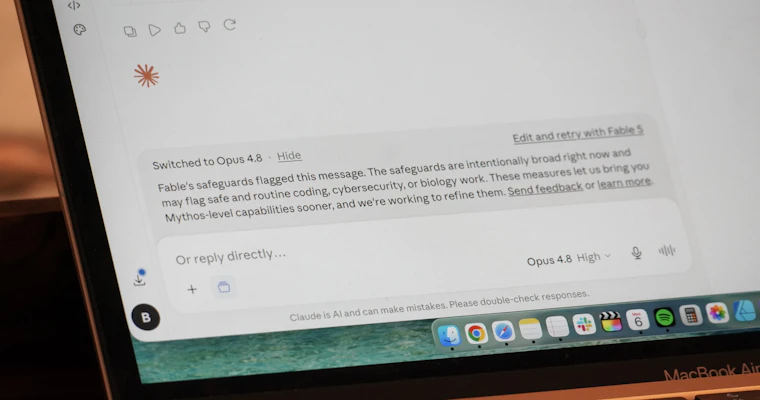
Google published a sentence saying no special optimisation is necessary, and an entire service category carried on being sold around it. Reading the source is most of this job.
What we actually do here
Six pieces of work, none of which is a new file or a markup layer. Most of it is ordinary SEO done to a standard an AI answer can use.
Indexation First
Google’s stated requirement for its AI features is that your pages are indexed and eligible for ordinary snippets. If that is not true, nothing else on this list matters, and it is where we start.
Answer the Question Directly
An answer engine quotes the passage that answers the question, not the page that ranks for the keyword. Pages that state the answer plainly and early get cited; pages that build to it over 1,200 words do not.
Entity & Authorship Clarity
Who you are, what you do, and who wrote it — consistent across your site, your structured data and everywhere else you appear. Ordinary SEO, and the part that makes a model confident enough to name you.
Verifiable Facts
Specific, checkable, dated claims rather than adjectives. Answer engines cite sources that state something a reader can verify, which is also the reason the numbers on this site are all traceable.
The AI Crawler Decision
Whether to allow GPTBot, ClaudeBot, PerplexityBot and the rest is a business decision, not a technical one — some send traffic back and some do not. We lay out the trade and you choose. It is your robots.txt.
Citation Tracking, Done Manually
We ask each engine the questions your buyers ask and record who gets cited, on a schedule. It is manual because no reporting exists. Anyone showing you an automated AI rank tracker is showing you an estimate.
One page, not thirty
A note on what is deliberately not here. There is no page for ChatGPT in London, or Gemini in Manchester, or any of the other combinations — the scaffold for them exists and is staying empty. Nothing about optimising for an answer engine changes by city, and thirty pages that differ by two nouns is the doorway pattern Google names in its spam policies. Here is what actually differs, which is by engine and not by place.
Google AI Overviews & AI Mode
Covered by Google’s published Search guidance, which states no additional requirements or special optimisations exist. Be indexed, be snippet-eligible, answer the question. Traffic appears inside ordinary Search Console data and cannot be separated from it.
ChatGPT
Its own crawler and its own citation set, frequently different from the top ten results. Testable by asking it, which is currently the only method anyone has.
Perplexity
The most visibly citation-driven of them, which makes it the easiest place to see whether your content is being used and the fastest feedback loop available.
Gemini
Google’s assistant rather than Google Search, and it does not behave identically to AI Overviews. Worth checking separately rather than assuming.
Claude and others
A growing set, each with its own crawler and its own robots decision to make. The list changes; the approach does not.
Where AI citations actually matter
Being cited by an answer engine is worth more in some markets than others, and it is worth almost nothing in a few. The difference is whether your buyer asks a question before they search for a supplier.
Considered B2B Purchases
Where the buyer researches for weeks and asks an assistant to compare options before ever typing a supplier name. Being the source in that comparison is worth more than a ranking for the eventual brand query.
Fintech & Regulated Sectors
Where the questions are factual and the answers are checkable, which is exactly what an answer engine prefers to cite. Compliance already forces the specificity these engines reward.
SaaS & Technical Products
Buyers asking “how do I” and “what is the difference between” long before they ask “who sells”. Documentation-grade content gets cited; brochure content does not.
Professional Services
Where a single client is worth thousands and the buyer is trying to understand the problem before choosing a firm. Clear authorship does real work here.
Local Services
Honestly, less. Local intent still resolves through the map pack and ordinary local results far more often than through an assistant, and we would rather spend your budget there.
Ecommerce
Mixed and moving quickly. Comparison and research queries are being answered by assistants; transactional ones mostly are not, yet.
What clients say
Real clients, quoted in their own words — published with their permission.
“Ghalib’s clear guidance has helped improve our website’s SEO performance.”
“Working with Ghalib has been an outstanding decision for our company.”
“We’d been burned by two agencies before Ghalib Ashrafi. First proper technical audit we’d ever had.”
“Highly professional and dedicated to achieving results.”
More of them, in full, on our reviews page.
— Our Proprietary Methodology —
The Visibility Framework™, applied to AI search
The method is the same one every engagement here runs on. What changes is that step one includes asking the engines directly, because no report exists to ask instead.
Visibility Score
We baseline whether your pages are indexed and snippet-eligible — Google’s stated requirement for its AI features — and then ask each answer engine the questions your buyers ask, recording who gets cited and where you are absent.
Custom Strategy
A keyword and content roadmap scoped to your niche and budget — which pages to fix, which to build, and which terms are worth the money here.
Execution
Senior strategists implement technical fixes, content and links as one roadmap — no juniors, no outsourcing, no handoffs between departments.
Track & Improve
Monthly reporting and continuous optimization — we re-test what’s working, cut what isn’t, and adjust as the market moves.
Honest, No-Nonsense Commitment
No one controls Google or AI search — so we'll never guarantee a #1 ranking. What we do guarantee: we baseline your visibility at the start — where you rank on Google and whether AI answers cite you — and if that baseline has not moved in 90 days, the next 60 days are free.
AI search work is not a separate invoice
This is included in the SEO retainers below rather than sold as an extra, because most of it is ordinary SEO done to a standard an answer engine can use. The one genuinely additional piece is citation tracking across the non-Google engines, and it is manual work rather than a licence fee. Prices are USD; UK clients are quoted in GBP.
Starter
A low-risk way to test SEO with us on a single site.
- Indexation & snippet eligibility
- Answer-first content structure
- Monthly reporting
Growth
For businesses whose buyers research before they shortlist.
- Everything in Starter, deeper execution
- Entity & authorship work
- Citation tracking across the answer engines
- Bi-weekly reporting calls
Enterprise
Multi-market brands and large content estates.
- Dedicated senior strategist
- Per-market citation tracking
- Crawler policy across the AI bots
- Custom reporting dashboard
If someone is quoting you a standalone AI SEO package for Google’s AI features, ask them which requirement they are meeting. Google’s documentation says there is not one.
What you’re actually committing to
Most agencies keep this in a contract you only see after the sales call. We would rather you knew now, because it is the question everyone asks second — right after the price.
- A 3-month initial term, then month to monthLong enough for the 90-day guarantee above to mean something, short enough that you are not trapped if it doesn’t work out. The wider industry standard is 6 to 12 months.
- 30 days’ notice to stopNo exit fee and no buy-out of the months you haven’t used. You leave when you decide to, not when the contract lets you.
- No setup or onboarding feeThe audit is free, and month one costs exactly what month two costs. Nothing is front-loaded.
- You own everythingAnalytics, Search Console, content, accounts and any tooling set up for you — all in your name from day one, and all still yours if we part ways.
- One fixed monthly feeAnything outside the agreed scope is quoted and approved by you before it starts. It never appears on an invoice as a surprise.
- Reporting written to be readWhat changed, what it moved and what is next — in plain English, at the cadence set out in your plan, not a 40-page export nobody opens.
These are the terms as they appear in the agreement itself — nothing here is softened for the website. The full wording lives in our terms and conditions, and you get the agreement to read before anything is signed or invoiced.
What we will not sell you
This section is longer than it would be on any other page here, because AI search is where the gap between what can be promised and what can be delivered is currently widest.
We will not sell you an AI text file or a new markup layer for Google’s AI features. Google’s documentation states you do not need one, and we would rather hand you that sentence than a quote. We will not sell you an AI rank tracker, because there is no ranking to track — an answer engine cites a handful of sources and the set changes with the phrasing of the question. And we will not tell you your “AI traffic” figure, because Google folds AI-feature visits into ordinary search data and nobody outside Google can separate them.
What we will do is tell you whether the engines cite you today, for the questions your buyers actually ask, and what is missing when they do not. That answer is produced by hand, on a schedule, and it is honest about being a sample rather than a measurement.
One more, because it is your decision and not ours: whether to let the AI crawlers in at all. Some send traffic back and some do not, and blocking them is a legitimate choice with a real cost on both sides. We will lay out the trade and implement whichever way you decide. It is your robots.txt and your content.
- No AI text file. Google states you do not need one for its features. We are not going to charge you for one.
- No AI rank tracking. There is no ranking. A citation set is not a position, and any number presented as one is invented.
- No isolated traffic figure. Google folds AI-feature visits into ordinary Search Console data. Nobody outside Google can separate them.
- Tracked by hand, and labelled as such. We ask the engines your buyers’ questions and record who is cited. It is a sample, and we say so.
- The crawler decision is yours. Allow or block the AI bots. We explain the trade both ways and implement your choice.
AI search questions, answered
Related SEO pages
Same service, different angle — by market, by discipline and by platform.
Want to know whether the engines mention you at all?
Free 30-minute audit · No obligation · Response within 24 hours
Get in touch with Ghalib Ashrafi HQ
Ghalib Ashrafi takes on work for brands in six markets — the UK, USA, UAE, Saudi Arabia, Australia and Pakistan. Every enquiry gets a reply within 24 hours.